Residential parasite pressures in Puget Sound thrive due to consistent relative humidity levels exceeding 70 percent, creating sustained survival conditions for flea larvae in carpets, subflooring, and crawl spaces. In…
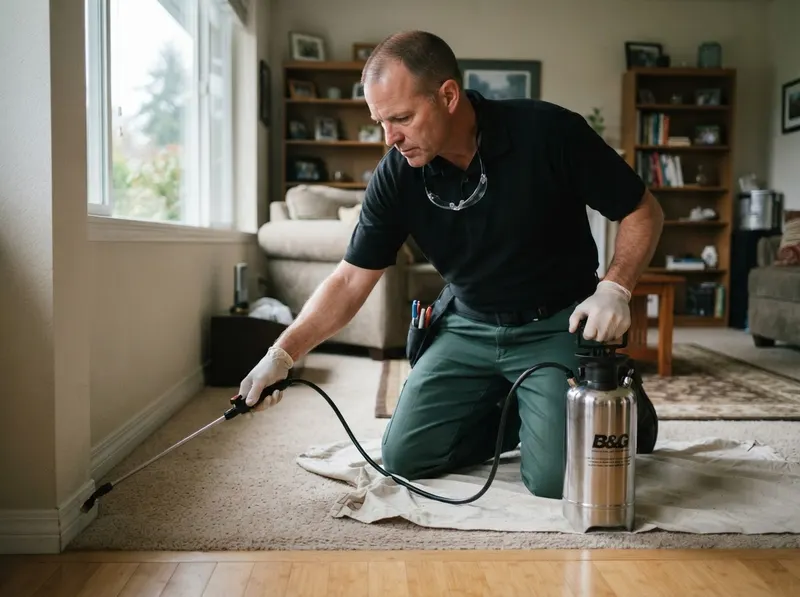
Residential parasite pressures in Puget Sound thrive due to consistent relative humidity levels exceeding 70 percent, creating sustained survival conditions for flea larvae in carpets, subflooring, and crawl spaces. In neighborhoods such as Ballard, Fremont, and Queen Anne, older craftsman homes with raised foundations and damp subfloors often house wildlife vectors like urban raccoons or feral rodents that introduce fleas into crawl spaces. Eliminating these pests requires disrupting the pupal phase, during which flea cocoons remain protected against ordinary contact sprays. Ironleaf Exterminating integrates non-volatile EPA-registered insect growth regulators that prevent juvenile larvae from transitioning into reproductive adults, preserving indoor air safety across historic properties.
Controlling indoor parasites in dense multi-family buildings or classic residences across Capitol Hill, Wallingford, and Columbia City demands precision between indoor treatments and structural host mitigation. An active infestation cannot resolve solely through carpet misting if secondary vectors, such as roof rats or nesting urban birds, continue to harbor parasites along rooflines and attics near sites like Woodland Park Zoo and Hiram M. Chittenden Locks. For properties near maritime greenbelts such as Discovery Park in Magnolia or coastal areas in West Seattle, treatments follow guidance from the CDC vector-borne agent controls and moisture containment frameworks established by the Public Health, Seattle & King County district.
Successful eradication follows three systematic phases. First, 1 to 2 days prior to indoor treatment, property residents complete a deep mechanical vacuuming of all carpet fibers, subfloor joints, and pet resting zones to stimulate pupae emergence, disposing of the vacuum canister debris in sealed exterior containers as recommended by the National Pesticide Information Center. Second, technicians execute precise ground-level crack-and-crevice treatments using juvenile hormone mimics compliant with Washington State Department of Agriculture pesticide regulations alongside exterior perimeter sprays to limit incoming moisture pests. Third, exterior foundation gaps, crawl space vents, and soffit spaces are sealed using corrosion-resistant 1/4-inch mesh wire, adhering to the structural pest exclusion protocols defined by the National Pest Management Association.
Selecting whole-home targeted treatments versus partial spot sprays involves clear operational trade-offs. Spot-treating a single living area saves upfront preparation time but carries an 80 percent risk of re-infestation within 21 days as emerging pupae migrate toward untreated human or animal hosts in adjacent rooms. Whole-home elimination requires strict pre-treatment pet and human vacancy for 2 to 4 hours while solutions dry, but ensures complete coverage across all larval development zones. Outside the structure, keeping lawn turf clipped under 3 inches and managing organic detritus around Green Lake Park and Beacon Hill properties follows guidelines from the WSU Extension entomology office and the Washington State Department of Health. Structural remediation works in concert with ongoing preventative care protocols directed by the American Veterinary Medical Association and botanical safety benchmarks from the Regional Integrated Pest Management Centers.
Every job gets a firm, written price after a free on-site visit.
For standards, safe disposal, and service guidance on PEST CONTROL SEVICE in Seattle, WA, useful references include U.S. EPA, ENERGY STAR, U.S. Dept. of Energy, Consumer.gov, U.S. Census Bureau, and Google Maps. General consumer and small-business resources are available from USA.gov, Better Business Bureau, FTC Consumer Advice, U.S. Small Business Administration, and Ready.gov.
Tell us about your flea and parasite elimination job in Seattle and we'll send a clear, written quote, usually the same day.
 Ironleaf Exterminating